
SLOTS & LOTS of FUN
The first video slot machine appeared in 1975, and the new technology completely changed the gaming world. Video slots use an RNG, a random number generator, instead of physical mechanisms. The possible number of paylines, quality of graphics, and bet amounts are just a few of the options that were expanded past what the traditional slot machine could achieve. Bonuses, free games, and progressive jackpots were other enticing elements that could now be added with this new technology. The introduction of video slots coincided with video poker, and both games saw a sharp increase in interest that can still be seen today.
The LANEtv Guide:
ONLINE SLOT MACHINES
One of today’s most popular staples at land-based and online casinos alike, the slot machine is a casino game that nearly every single player has tried at some point in time. Its basic game structure and flashy yet familiar visuals are both comforting and enticing. Real money slot machine games draw players in, sometimes for hours upon hours without them even realizing it. Slots are immersive, slots are fun, it’s been said there’s a slot for everyone!
Cool fact – did you know that in Australia they call it online pokies?
TOP ONLINE CASINOS TO PLAY ONLINE SLOTS
coolcat casino banner
300% Bonus
Casino ReviewPlay Now
planet 7 casino banner
400% Bonus
Casino ReviewPlay Now
slots of vegas banner
250% Bonus
Casino ReviewPlay Now
All Casino Bonus Codes
HOW TO PICK THE BEST CASINO TO PLAY REAL MONEY ONLINE SLOTS
1
Security
First and foremost, when it comes time to play online slots for real money you must consider the level of security that an online casino offers. All of the casinos reviewed here at USA Online Casino have been proven to be secure and trustworthy; they all feature industry-standard security protocols, personal data protection, and a quick, efficient system for banking transactions. Choose a casino from our comprehensive list – we’ve already reviewed and determined that these establishments meet the high standards that all players deserve.
2
Promotions
The promotions offered to both new and existing players are an important aspect that can distinguish average casinos from superior casinos when making your selection. Almost all casinos will offer welcome bonuses for new player sign-ups. Choosing the most favorable bonus will enhance your bankroll, extend the duration of play time, and, best of all, increase your potential winnings. Be sure to browse the wide range of latest bonus offerings we’ve reviewed at USA Online Casino and remember to read the fine print before selecting the perfect bonus.
3
Variety
Game selection is the next point to keep in mind. If you already have some experience with real money online slots, you’ll want to check the list of available games to ensure that the casino offers the ones that you’re most interested in. If you’re entirely new, it’s important to browse the options and see what catches your eye. Whether you’re a beginner or experienced player, it doesn’t make sense to choose an online casino with a limited portfolio of games. Make sure you’ll have a chance to explore outside of the familiar.
Start to play
After covering these critical considerations, you’ve gotten the serious stuff out of the way. The only thing left is to actually get started, and this is where the “online” part of an online casino really comes in. All players are free to choose how they want to play, and they have total control over their experience. Enjoy the flexibility you have to play however, wherever, and whenever the mood strikes you.
TYPES OF ONLINE SLOTS
classic slots
Classic Slots
Today, the basic 3-reel slots that resemble Fey’s first slot machine are also known as classic slots. Classic slots are more minimalist than 5-reel slots, which are more commonly found in modern casinos. Each reel contains ten to 32 symbols, and the number of possibilities determines the odds and payouts. Depending on the design of a specific machine, the player either presses a button or pulls a lever to spin the reels. To win, the player must get three of the same symbols in a row. The simplicity and nostalgic quality of these older machines appeal to beginners and seasoned players alike.
video slots
Video Slots
The first video slot machine appeared in 1975, and the new technology completely changed the gaming world. Video slots use an RNG, a random number generator, instead of physical mechanisms. The possible number of paylines, quality of graphics, and bet amounts are just a few of the options that were expanded past what the traditional slot machine could achieve. Bonuses, free games, and progressive jackpots were other enticing elements that could now be added with this new technology. The introduction of video slots coincided with video poker, and both games saw a sharp increase in interest that can still be seen today.
straight slots
Straight Slots
Also known as flat top slots or static slots, these slot machine games are simple. In fact, all of the first slot machines were straight slots. Straight slots contain a single payline, one jackpot, and no bonus games. At one point, almost all slot machine games had a fixed top jackpot. These offer a lower top prize for the winner, which means they are typically less popular with players. However, it’s important to note that the chances of winning are far higher than the chances of winning a progressive jackpot.This is a large category of slots that contain multiple paylines, including any slot machine that allows for multiple winning combinations. Classic slots contained just a single payline – three identical symbols in a row, or some other designated combination. The newer slot machines have multiple paylines on five reels, and the multiple winning combinations allow the player to bet on any number of paylines. The higher the number of winning lines, the greater the chances of winning. However, this often comes with higher bet amounts as well.
Sometime after the introduction of video slots, progressive slots were released. They were a natural development that came with the technology of video slots. With progressive video slots, the jackpot increases over time. It grows as more and more people play the game. The game calculates a small percentage of each bet and adds it to the jackpot until it is hit, at which point the jackpot amount is reset. A standalone progressive is specific to a machine, but video slots also allowed games to be linked, which means that the progressive jackpot feature doesn’t need to be limited to one machine. Similarly themed games are sometimes linked together to pool even bigger jackpots.
William Lane Adcock runs a gaming consultantancy.
Hogs impress 4 star recruit on visit!

Arkansas was surprising but at the same time, the fan base let me know everything on Twitter. The fan base is pretty straight forward. It was everything I expected.”
Salter, who also holds offers from Auburn, Baylor and several others, is being recruited to Arkansas by offensive coordinator Kendal Briles. The first-year Razorback assistant led the Hogs in signing one of the nation’s top quarterbacks in 2020 four-star Malik Hornsby of Missouri City (Texas) Fort Bend Marshall.
“I’ve known Coach Briles since I was a freshman when I went to camp at Houston,” Salter said. “He told me he would find me again and he did. Our relationship is great.“I love Coach Briles’ offense. I was in the quarterback room watching them go through fim, watched the techniques and drills, even watched the quarterbacks in the weight room.”
Salter also enjoyed his time with the head Hog.
“Coach Pittman had great energy, I loved him,” Salter said. “He told me I’d fit in the offense great. As far as I could see, I also fit. We watched some highlights and film from the quarterback history and I could see myself in this offense.”The four-star quarterback also shed light on when he’d like to make a decision.
“I’m not going to rush it but most likely I’ll hopefully be committed by my senior season or mid-season,” he said. “Arkansas will most definitely get an official visit. I’ll look into Ole Miss more, I don’t know.”
The SEC is clearly a huge draw for Salter.Most likely the SEC will probably be the best thing for me,” he said. “Most of my offers that I’m interested in are SEC schools. One of them might be the pick.”
Midlands Region Recruiting Analyst Gabe Brooks evaluated Salter in person last fall and compares him to Utah State standout Jordan Love, who is projected to go in the top ten of next month’s NFL Draft according to CBS Sports’ latest mocks.
“Lean, athletic build with adequate height,” Brooks said. “Will need to fill out upper body but athletic lower-body build. Natural playmaker with instincts and feel. Good downfield arm strength with above average short-to-intermediate velocity. Great improvisational skills. Dangerous in the scramble drill. Very mobile and throws well on the move. Pass-first QB but definitely athletic enough to hurt defenses with his legs. Encouraging athletic profile. Track and field athlete who competes in 300 hurdles, high jump, long jump, and triple jump. Will need to continue adding bulk to strengthen overall build. That will also maximize arm strength, particularly vertically. Can tighten delivery and get a bit quicker with release. One of the top QB’s in Texas for his class. High-major prospect with long-term NFL Draft potential.”According to the industry-generated 247Sports Composite rankings, Salter is the nation’s No. 244 overall prospect, the No. 10 player at his position and the No. 39 overall player in the state of Texas. 247Sports’ own rankings have him listed much higher, however, as the No. 89 overall prospect in the land, the No. 4 dual-threat quarterback, and the No. 12 player in the Lone Star State.
Arkansas is expected to host another heavily-recruited quarterback target from Texas on April 25 when Kyron Drones of Pearland Shadow Creek visits the Razorbacks’ spring game. Drones was offered by the Hogs on January 30 and has since added new offers from Auburn, Ole Miss, TCU and others.
The Razorbacks will host several more unofficial visits this Saturday when they hold their second junior day of the year. The razobacks need to make up the talent gap with the quickness. It looks like Kendall Briles wide open attack is an attractive option for some really talented offensive prospects.
The tempature?Highs and Lows
Markets had their worst week since the financial crisis — blame viral uncertainty
Taking Wall Street’s temperature… The S&P 500 boils down the stock prices of the 500 “most valuable” publicly traded companies on American exchanges into a single number. That number helps us quickly answer the question: “How is the US stock market doing?” Here’s how the S&P 500’s “temperature” changed from February 19th to February 28th (last Friday):
Feb 19th: 3,386 points.
Feb 28th: 2,954 points.
That’s a 13% drop in just 7 days of trading.
This isn’t the same as ’08… Back then, a financial crisis was caused by deep internal problems with our economy (a housing market bubble and massive debt). The threat this time is external: COVID-19 (aka coronavirus) had already shut down big chunks of the Chinese economy — but last week, the economic disruption spread to Italy, South Korea, and Iran.
There’s no cure/vaccine yet: But the Fed’s chairman Jerome Powell said Friday that he stands ready to dish out monetary medicine via the central bank’s bazooka of cash.
It’s a correction, not a bear market: Since 1946, market corrections with declines of between 10% to 20% have happened 29 times (once every 2.5 years on average) according to Guggenheim Funds. A bear market means a fall of over 20% — hasn’t happened (yet).
The bull market is still bucking: The S&P 500 has more than quadrupled since hitting a bottom in March 2009 — in 11 years, it hasn’t dipped more than 20%. That’s the longest bull market tracked to date.
THE TAKEAWAY
Uncertainty is the market’s illness… This public health outbreak could be a major hit to the economy, or it could be a blip on the freakout radar. Instead of gambling on those two outcomes, many investors have sold out of risky assets (stocks). The 10-Yr Treasury yield fell to a record low rate, meaning investors are piling into relatively safer government bonds because of uncertainty.
Worst case: To crush a domestic epidemic, the government could mandate that cities, states, or the whole country stay at home for 30 days, which would contract our economy, shrink profits, and hurt stocks.
Best case: The disease could remain contained (aka no epidemic at all in the USA), and there’s no major disruption to our economy. America’s collective stress can return to its normal, elevated state. It’s hard for anyone to doubt the fact that markets do not like uncertainty of any kind. If you rely on Rodney Dangerfield’s character in caddy shack to guide you long term (I certainly do) …if they’re all buying then sell sell sell! You can rest assured your money is spent before it gets saved or invested.
They’re all buying? Then sell sell sell!
Rodney Dangerfield


Games of Thrones
Monday (May 14, 2018), the United States Supreme Court struck down a 1992 federal law that prohibited most states from legalizing gambling on sporting events. That decision found that, while the federal government could regulate sports betting itself, what it could not do–and what the 1992 statute did–was direct the states to prohibit sports gambling under state law.
Following that decision, there are two possible routes that the issue could take. The less-mentioned option is that Congress could decide to take up the matter itself and regulate sports betting at the federal level. Under the doctrine of preemption, it is probable that, if Congress goes that route, their regulation would be seen to “occupy the field” of sports-betting regulation, and the states would not be free to pass any regulations that were less stringent than the federal law.
On the other hand, as was reported widely yesterday, if Congress does not act, the Supreme Court’s decision leaves the regulation of sports betting to the individual states. This possibility has left some folks, including me, wondering: if Arkansas’s legislature decided to take steps to legalize and regulate sports betting, what would that process look like?Before we dive into the finished product, however, let’s review some history, both for context and because it is a weirdly fascinating look at Arkansas.
The 1874 Arkansas Constitution only deals with one type of gambling: lotteries. Article 19, section 14, originally prohibited lotteries in all forms in the state. Thus, under the Arkansas Constitution, gambling other than lotteries was not originally prohibited and was a matter of various state laws. Unfortunately, at least for people who like clarity in such matters, the Arkansas Constitution did not define “lottery.”
Horsing (and Dogging) Around
It was into this grey area that lack of a definition of “lottery” created that horse racing was born in the state. In the late 1890s, Sportsman Park was built on the southeastern side of modern Hot Springs, sparking something of an interest in bringing the increasingly popular sport of thoroughbred racing to Arkansas. In 1902, William McGuigan, a member of the Arkansas Legislature, bought land on Malvern Avenue in Hot Springs. In 1903–purely by coincidence with McGuigan’s purchase, I’m sure–a number of anti-gambling laws that had been passed in the 1880s and 1890s were repealed. Then, blessed with his good legislative luck, McGuigan turned that land on Malvern Avenue, nestled close to the railroad tracks at a time when rail travel was the preferred method of traversing the state, into Essex Park, which opened in 1904.
Essex Park was immediately successful, which, as might be expected, attracted the attention of would-be competitors. A group of businessmen that included Charles and Louis Cella formed the Oaklawn Jockey Club in 1904 and purchased land north of Hot Springs on which to build another horse-racing track. Oaklawn opened in 1905 and, unlike the open-air wooden grandstands of Essex Park, featured a glass front and steam heat to make watching the races more comfortable.
McGuigan, angry that Oaklawn was eating into Essex Park’s profits, and apparently more than willing to cut of his nose to spite his face, joined with Reverend W.T. Amis and formed the Citizens Improvement Union, whose only apparent goal was to stamp out horse racing in Arkansas entirely. In 1907, during racing season no less, McGuigan used his connections as a former legislator and succeeded in getting the Citizens Improvement Union’s bill passed, which outlawed horse racing anywhere in the state.
Hot Springs being Hot Springs, Oaklawn initially tried to ignore the new law and to continue having horse races. However, McGuigan continued using his connections, and both police and others who were decidedly not actually police harassed would-be attendees outside Oaklawn, with gate receipts falling off rapidly because of this. Faced with this new reality, Oaklawn was forced to close its doors to horse racing in 1907, though the infield was used for other purposes, including the Arkansas State Fair from 1906 to 1914.
In 1913, a number of fires ravaged downtown Hot Springs, leading to a downturn in tourism dollars coming into the city. In 1914, a group of Hot Springs business leaders convened and decided that a return of horse racing to the city would be just the thing to improve the local economy. A bill to revive horse racing in the state easily passed the legislature in 1915, but Governor George Washington Hayes vetoed it. A lawsuit followed, attempting to get the veto overturned, but the Arkansas Supreme Court sided with the Governor and affirmed the veto. Nevertheless, in 1916, Oaklawn reopened in connection with the the Business Men’s League, under the guise of a having horse races–with no betting, you guys! We swear!–as a civic event. It was an abbreviated race season, but was successful enough that Oaklawn and Essex Park made plans to split a full racing season in 1917. Essex Park, however, burned to the ground immediately after opening day of the 1917 season, leaving Oaklawn as, literally, the last place standing.
Around this same time, Louis and Charles Cella became the sole owners of Oaklawn. (Louis died in 1918, and Charles took total ownership at that time.) It was not smooth sailing from that point forward, however. In 1919, a circuit judge ruled that holding the races at all was illegal, and Oaklawn again had to cease having races.
In 1929, a new bill to legalize horse racing passed the Arkansas legislature, only to be vetoed again, this time by Governor Harvey Parnell. Legislatures in 1931 and 1933 could not get the votes to get a similar bill to the Governor’s desk, what with being more concerned with things like the Great Depression.
Yet, it was the Great Depression that triggered the next move in the history of Oaklawn. In 1934, with the city (like so many cities) deep in financial struggles, Hot Springs Mayor Leo McLaughlin and several prominent Hot Springs businessmen formed the Business Men’s Racing Association and announced that racing would re-start at Oaklawn in March of 1934, which it did, without any approval by the legislature or the state in general. Betting was still technically prohibited, of course.
Rather than attempt to stop the racing, the Arkansas legislature passed, and Governor Junius Futrell signed, Act 46 of 1935, which legalized pari-mutuel betting on horse races. Ironically enough, it was the Depression that seems to have provided the final impetus for the passage and signing of Act 46, as Arkansas was struggling financially, and Act 46 gave the state a set fee for every day that racing was held, plus a percentage of every dollar bet and every admission.Following that decision, there are two possible routes that the issue could take. The less-mentioned option is that Congress could decide to take up the matter itself and regulate sports betting at the federal level. Under the doctrine of preemption, it is probable that, if Congress goes that route, their regulation would be seen to “occupy the field” of sports-betting regulation, and the states would not be free to pass any regulations that were less stringent than the federal law.
On the other hand, as was reported widely yesterday, if Congress does not act, the Supreme Court’s decision leaves the regulation of sports betting to the individual states. This possibility has left some folks, including me, wondering: if Arkansas’s legislature decided to take steps to legalize and regulate sports betting, what would that process look like?
Before we dive into the finished product, however, let’s review some history, both for context and because it is a weirdly fascinating look at Arkansas.
The 1874 Arkansas Constitution only deals with one type of gambling: lotteries. Article 19, section 14, originally prohibited lotteries in all forms in the state.
Thus, under the Arkansas Constitution, gambling other than lotteries was not originally prohibited and was a matter of various state laws. Unfortunately, at least for people who like clarity in such matters, the Arkansas Constitution did not define “lottery.”
Horsing (and Dogging) Around
It was into this grey area that lack of a definition of “lottery” created that horse racing was born in the state. In the late 1890s, Sportsman Park was built on the southeastern side of modern Hot Springs, sparking something of an interest in bringing the increasingly popular sport of thoroughbred racing to Arkansas. In 1902, William McGuigan, a member of the Arkansas Legislature, bought land on Malvern Avenue in Hot Springs. In 1903–purely by coincidence with McGuigan’s purchase, I’m sure–a number of anti-gambling laws that had been passed in the 1880s and 1890s were repealed. Then, blessed with his good legislative luck, McGuigan turned that land on Malvern Avenue, nestled close to the railroad tracks at a time when rail travel was the preferred method of traversing the state, into Essex Park, which opened in 1904.
Essex Park was immediately successful, which, as might be expected, attracted the attention of would-be competitors. A group of businessmen that included Charles and Louis Cella formed the Oaklawn Jockey Club in 1904 and purchased land north of Hot Springs on which to build another horse-racing track. Oaklawn opened in 1905 and, unlike the open-air wooden grandstands of Essex Park, featured a glass front and steam heat to make watching the races more comfortable.
McGuigan, angry that Oaklawn was eating into Essex Park’s profits, and apparently more than willing to cut of his nose to spite his face, joined with Reverend W.T. Amis and formed the Citizens Improvement Union, whose only apparent goal was to stamp out horse racing in Arkansas entirely. In 1907, during racing season no less, McGuigan used his connections as a former legislator and succeeded in getting the Citizens Improvement Union’s bill passed, which outlawed horse racing anywhere in the state.
Hot Springs being Hot Springs, Oaklawn initially tried to ignore the new law and to continue having horse races. However, McGuigan continued using his connections, and both police and others who were decidedly not actually police harassed would-be attendees outside Oaklawn, with gate receipts falling off rapidly because of this. Faced with this new reality, Oaklawn was forced to close its doors to horse racing in 1907, though the infield was used for other purposes, including the Arkansas State Fair from 1906 to 1914.
In 1913, a number of fires ravaged downtown Hot Springs, leading to a downturn in tourism dollars coming into the city. In 1914, a group of Hot Springs business leaders convened and decided that a return of horse racing to the city would be just the thing to improve the local economy. A bill to revive horse racing in the state easily passed the legislature in 1915, but Governor George Washington Hayes vetoed it. A lawsuit followed, attempting to get the veto overturned, but the Arkansas Supreme Court sided with the Governor and affirmed the veto. Nevertheless, in 1916, Oaklawn reopened in connection with the the Business Men’s League, under the guise of a having horse races–with no betting, you guys! We swear!–as a civic event. It was an abbreviated race season, but was successful enough that Oaklawn and Essex Park made plans to split a full racing season in 1917. Essex Park, however, burned to the ground immediately after opening day of the 1917 season, leaving Oaklawn as, literally, the last place standing.
Around this same time,
Louis and Charles Cella became the sole owners of Oaklawn. (Louis died in 1918, and Charles took total ownership at that time.) It was not smooth sailing from that point forward, however. In 1919, a circuit judge ruled that holding the races at all was illegal, and Oaklawn again had to cease having races.
In 1929, a new bill to legalize horse racing passed the Arkansas legislature, only to be vetoed again, this time by Governor Harvey Parnell. Legislatures in 1931 and 1933 could not get the votes to get a similar bill to the Governor’s desk, what with being more concerned with things like the Great Depression.
Yet, it was the Great Depression that triggered the next move in the history of Oaklawn. In 1934, with the city (like so many cities) deep in financial struggles, Hot Springs Mayor Leo McLaughlin and several prominent Hot Springs businessmen formed the Business Men’s Racing Association and announced that racing would re-start at Oaklawn in March of 1934, which it did, without any approval by the legislature or the state in general. Betting was still technically prohibited, of course.
Rather than attempt to stop the racing, the Arkansas legislature passed, and Governor Junius Futrell signed, Act 46 of 1935, which legalized pari-mutuel betting on horse races.
Ironically enough, it was the Depression that seems to have provided the final impetus for the passage and signing of Act 46, as Arkansas was struggling financially, and Act 46 gave the state a set fee for every day that racing was held, plus a percentage of every dollar bet and every admission.
Predictably, a citizen sued the Secretary of the Arkansas Racing Commission, arguing that such betting was an illegal lottery prohibited by the Constitution. In holding that the betting under Act 46 was not an unconstitutional lottery, the Arkansas Supreme Court explained
:
A lottery is a species of gaming, which may be defined as a scheme for the distribution of prizes by chance among persons who have paid, or agreed to pay, a valuable consideration for the chance to obtain a prize. […] It appears therefore that to constitute a lottery it is essential not only that the element of chance is present, but also that it controls and determines the award of the prize whatever it may be.
[…] A game of chance is said to be such a game as is determined entirely or in part by lot or mere luck, and in which judgment, practice, skill and adroitness have honestly no office at all, or are thwarted by chance. It was there further said: “The test of the character of the game is not whether it contained an element of chance or an element of skill, but which of these is the dominating element that determines the result of the game.”
Unsettlingly, if you were interested in keeping horse racing around long-term, a number of the Justices dissented in that decision. In another case in 1953, Chief Justice Griffin Smith noted in a concurring opinion that he thought the prior decision was incorrect and should be revisited and overruled.
Faced with this uncertainty about the future of pari-mutuel betting in Arkansas, John G. Cella, who had taken over from Charles Cella in 1940), succeeded in getting a proposed amendment on the November 1956 ballot. The amendment, which passed easily and became Amendment 46, stated in no uncertain terms:
Horse racing and pari-mutuel wagering thereon shall be lawful in Hot Springs, Garland County, Arkansas, and shall be regulated by the General Assembly.
In the 1957 legislative session, the Arkansas General Assembly quickly went to work codifying and cleaning up the rules regarding horse and greyhound racing. Act 46 of 1957
created in broad strokes the current system of licensing and taxing horse-racing facilities, and it gave each county a local option to approve, by popular vote, new horse racing venues in the state once a temporary license was issued. They did not stop there, though; they also passed Act 191
, which officially legalized greyhound racing and pari-mutuel betting, placed it under the aegis of the Racing Commission that was created under Act 46, and gave a local option for approval of new greyhound racing venues.
Why did they bother with passing laws for greyhound racing if Amendment 46 only dealt with horse racing? Because Southland Racing Corp. had more or less forced the legislature’s hand the previous year.
In 1956, Southland Racing Corp. applied for a license to hold greyhound races, with pari-mutuel betting, in Crittenden County. Southland had built a forum for the races and had complied in every required way with the statutory framework at the time. (The legislature had passed legislation regarding greyhound racing in the same 1935 session where they approved horse racing/betting.) The Arkansas Racing Commission denied Southland’s application, despite Southland’s compliance with the statutes, and Southland sued the Commission for an injunction directing the Commission to issue the license.
The suit was filed in Chancery Court in Crittenden County, and the Commission filed a demurrer. (A demurrer was, basically, the legal equivalent of saying “I’ve seen what you filed…so what?”) The Chancellor directed the Commission to file an actual answer to the complaint, and the Commission refused, so the Chancellor found in favor of Southland. The Commission appealed and argued that the statutes allowing for betting on greyhound races were unconstitutional. The Supreme Court held that, on that case as presented, they could not say that the statutes were unconstitutional, as there was nothing in the record to suggest that greyhound betting was an illegal lottery under the rationale set forth in the earlier horse-racing case.
Essentially, by riding on the heels of horse racing, and by lucking into a Racing Commission who failed to properly defend the lawsuit against them, Southland was able to more quickly and smoothly get up and running. Further, both because of Amendment 46 making horse racing and pari-mutuel betting unquestionably legal for horse racing in Hot Springs and because the State was getting a percentage of bets and attendance along with daily racing fees, there was no motivation for the legislature to attempt to differentiate between what Oaklawn was doing and what Southland was doing.
Games of “Skill”
That is where legal gambling stood in Arkansas for several years, without much change to the horse or greyhound statutes. Then, in 2005, the legislature passed Act 1151, which allowed for the people in “cities or counties where horse racing or greyhound racing parks are located” to vote on whether to allow the horse- or greyhound-racing venues to also feature “electronic games of skill.”
A few things jump out about that 2005 legislation. Most notably, while the pre-existing statutes allowed any county or city to vote on whether to have a horse- or greyhound-racing venue, only those places that had horse or greyhound racing could vote to have electronic gaming. Given the cost of getting a racing facility up and running, to say nothing of the uphill climb of trying to compete with long-existing racing venues, it is no stretch to say that the 2005 law was more or less specifically designed to guarantee that only Oaklawn and Southland would have electronic gaming for the foreseeable future. (If you are wondering why the legislature would do this, you can probably find most of your answer by looking at the amount of campaign contributions made each cycle by Charles J. Cella and others associated with Oaklawn.)
The other big thing that stands out from the 2005 legislation is this:
“Electronic games of skill” means games played through any electronic device or machine that afford an opportunity for the exercise of skill or judgment when the outcome is not completely controlled by chance alone.
This was done to comport with the generally accepted definition of what is and is not a lottery, as set out in the 1949 Supreme Court decision (and later cases that cited it). According to that Longstreth decision, remember, a “lottery,” within the meaning of the Arkansas Constitution, is a game that
is determined entirely or in part by lot or mere luck, and in which judgment, practice, skill and adroitness have honestly no office at all, or are thwarted by chance.
This seems straightforward enough. An electronic game that was completely dependent on chance and required no skill would be barely different from a lottery, so you would basically have to prevent those games to stay within the lines of the Arkansas Constitution.
Except, if you’ve actually been in the casino at Oaklawn or Southland, you have certainly seen how slot machines appear to be crammed into every available inch. And what casino game takes less skill and is more reliant on pure chance than a traditional slot machine?
It’s time to dispel some myth; slot machines are a game based entirely on chance. The push of a button leads to a number of symbols on reels. If the symbols match up money is paid out. [N]no matter how flashy a slot machine may seem, you are always looking at a digital representation of a pseudo random number generator (SRNG). Behind the games and reels is a set of numbers, and when you push the button the RNG decides whether or not you have won.
The casinos (or “racinos,” if you want to be pretentious about it) got around this vis-a-vis slot machines by initially having (or claiming to have) slot machines that used two spins per play, where the player could see the first spin, keep some combination of the symbols that showed up on the first spin, and then have the second spin to try to make a winning match. Except, as you know if you’ve played slots at Oaklawn recently, that is not how nearly any of the slots on site actually work. As one slot player put it when I asked whether her favorite Willy Wonka-themed slot machine was one spin or two spins per play:
One spin. I just press the button and hope for the Oompa Loompas to line up.
This makes sense. The Dept. of Finance & Administration regulations regarding electric games of skill specifically allows for games based on a random number generator. Those regulations even have lengthy descriptions of how random and non-countable a random-number generator must be to be part of an approved game.
So…how does a single-spin, purely chance-driven slot machine pass muster under the 2005 law? With occasional gimmicks that require some modicum of “skill,” even where that “skill” appears to be nothing more than knowing how to read or realizing you have to hit a button a second time.
Under the 2005 law, DF&A sets the big-picture regulations for the gaming scheme, and they set the requirements for licensing of casinos as well as the games that can be used in the casino. DF&A does not, however, actually inspect the technical aspects of a given game, nor do they provide a specific list of what does and does not constitute a skill.
Rather, there is some outsourcing involved. Under DF&A regulations, a company that builds a new electronic game and wants that game able to be used in an Arkansas casino must get a company called Gaming Laboratories International to review the game’s rules of play. Specifically,
GLI shall examine and test all games of skill and shall issue a recommendation to the Arkansas Racing Commission that the machine be certified as meeting the criteria under Arkansas Code Section 23-113-101 et seq (Act 1151 of 2005), or that the machine fails to meet that criteria.
As GLI’s criteria explain,
Skill means the human attributes of a player such as knowledge, dexterity, visual recognition, logic, memory, reaction, strength, agility, athleticism, hand-to-eye coordination, numerical and/or lexical ability, or any other ability or expertise relevant to game play.
Those little mini-games that pop up on some slot machines, wherein the player tries to catch a fish or remember where a certain item was on the screen or whatever? That’s the skill component that, according to GLI, makes those slots different from regular slots that lack these things.
So, essentially, as long as the slot machine has SOME additional aspect that requires the player to show that they are a living, breathing human to play that part of the game, the entire slot machine can qualify as a “game of skill,” even if the additional component is still more or less luck, as long as that aspect gives you the opportunity to get an extra spin or somehow increase your potential payout. Of course, neither GLI nor DF&A requires that those “skill” aspects appear after every spin, so the current regulations basically mean that a game that is pure chance nearly all the time becomes a game of skill as long as something nominally different happens every now and then.
Drawing Lots
Unlike the horse-racing-related Amendment 46, which was done solely to give peace of mind to the Cellas about the long-term legality of horse racing and pari-mutuel betting in Arkansas, the Arkansas Constitution’s specific prohibition against lotteries meant that the legislature could never create one simply through legislation. Instead, it would take a constitutional amendment to make that happen.
In 2006, as part of his campaign for Lt. Governor, Bill Halter began to talk about pushing for a statewide lottery, with proceeds going to educational scholarships. Halter won that race and helped spearhead getting the legislature to refer a constitutional amendment to the people to create that lottery system. The proposed amendment appeared on the November 2008 ballot and passed by a roughly two-to-one margin, becoming Amendment 87. Starting in the 2009 regular legislative session, the General Assembly put together the statutory framework for how the lottery would be run, how money would be disbursed, and the like.
The lottery is new enough, and enough words have been written about its plusses and minuses, that a deep dive into the system is probably not necessary here. Suffice it to say that, while the lottery has undergone tweaks and alterations in the 9+ years since it was approved, the actual passage of Amendment 87 and the creation of the lottery system represented the last substantive change to legal gambling in Arkansas until the 2017 regular session.
Dear Mr. Fantasy
After almost a decade of no newly approved gambling in the state, the 2017 General Assembly passed Act 1075, which allowed for the playing of daily, paid fantasy sports (e.g., DraftKings, FanDuel, etc.). Interestingly, despite the fact that those kinds of games actually do require skill and allow for someone to wager his or her money and receive a payout based on outcomes that are a combination of skill and luck, the legislature specifically mentioned in Act 1075, “a paid fantasy sports game conducted in compliance with this chapter does not constitute gambling for any purpose.” Well, ok!
Regardless of that distinction, Act 1075 effectively allowed players to participate in online daily fantasy sports games and imposed a tax on the operators of those games. People were already playing those games, however, so the real impact of Act 1075 was to try to let Arkansas profit from the activity that was already happening and to clarify that these games were not illegal in Arkansas.
Sports Betting?
As mentioned 3600 words ago, Monday’s Supreme Court ruling leaves two paths forward when it comes to sports betting. Assuming the U.S. Congress decides not to act to regulate sports betting directly, it would fall to the states to decide if and how to allow and regulate that betting.
When I first thought about this issue, my immediate reaction was that the current makeup of the General Assembly was probably not going to allow sports betting any time soon. After researching this article, though, I’ve definitely changed that thought. I think the more likely outcome is the passage of another statutory scheme similar to the 2005 electronic-gaming statutes, wherein the legislature limits sports betting to Oaklawn and Southland by making the option to have sports betting subject to local votes in “cities or counties where horse racing or greyhound racing parks are located.”
They will likely justify this limitation by pointing to how betting at those locations is already regulated and how those locations already have betting infrastructure in place, which are both true statements but still miss the point. Those justifications will, of course, be a smoke screen for the real reason for that kind of limitation: further enriching Charles J. Cella and the corporate owners of Southland, both of whom are dependable donors of big campaign checks.
That is the current reality in Arkansas, after all. Things that could be used to make an economic impact in any variety of locations somehow mysteriously wind up just making an economic impact to the same groups of people who benefit over and over again. I’d wager that sports betting will not be any different.
***
Note: Many thanks to UALR-Bowen Law School Professor Jeff B. Woodmansee for his assistance on the horse/greyhound racing research for this post.
We’ll come back to that.
Interesting side note: admission in 1905 was $2, same as it was until a few years ago, though $2 in 1905 is worth nearly $53 today.
Somewhere between 1914 and 1916, depending on your source
Pari-mutuel betting is the betting that you are likely already familiar with if you’ve wagered at Oaklawn. In it, the bettors on the top three horses divide the money wagered by the people whose bets did not win.
Side note that makes almost no damned sense: Act 46 of 1935 gave the state $500 per racing day, 4 cents of each dollar wagered, and 10 cents of each admission. In 2018, Arkansas received…$500 per racing day and 10 cents from each admission.
Longstreth v. Cook, 215 Ark. 72, 220 S.W.2d 433 (1949).
Verbosely entitled, “AN ACT to Legalize Horse Racing and Pari-Mutuel Wagering Thereon in all Political Subdivisions of the State of Arkansas not Covered by Amendment 46 to the Constitution of the State of Arkansas; to Regulate and Control Horse Racing and Pari-Mutuel Wagering Thereon in the State of Arkansas; to Create and Establish an Arkansas Racing Commission; to Repeal Act 46, Approved February 16, 1935; Act 9, Approved January 31, 1945; Act 232, Approved March 5, 1951; Act 3, Approved January 15, 1953; and Section 32 (I) of Act 118, Approved February 20, 1953; and for Other Purposes.”
“AN ACT to Legalize Greyhound Racing and Pari-Mutuel Wagering Thereon in All Political Sub-Divisions of the State of Arkansas; to Regulate and Control Greyhound Racing and Pari-Mutuel Wagering Thereon in the State of Arkansas; to Repeal Act 339 of the Acts of 1935, Approved A
Blessed by the BEST
Be aware of how criticism affects your partner. Instead, give them compliments and focus on their strengths. When you speak in terms of their weaknesses, frame them in a positive manner.
Talk about how their actions affect you, and give suggestions with humility and love.
If we imagine an opportunity or aspect of reality and focus on it, working towards that goal, we can manifest our desires and wishes.
It’s a simple concept that a lot of people complicate.
You Always Feel Ready For Change
You aren’t afraid to face your fears and challenges head on, giving everything you’ve got to life. You accept the things you can’t change and are grateful for what you can change.
Change is a necessary and unstoppable part of life.
By welcoming constantly in flux aspects of life, we ensure that we are in a position to best take advantage of our shifting horizons.
Your Attention Is Kept On The Present Moment
The present moment is the only time frame that we have power over. The past is irreversible and subject to interpretation depending on why we are looking backwards.
The future is completely uncertain and full of assumptions and expectations. The best way to manifest a better tomorrow is to keep our present moment in line with our intentions.
You Naturally Turn The Negative Into Positive
You understand that you won’t be successful at everything you do all the time. Besides our own shortcomings sometimes negative aspects pile up at our feet, seeming to limit our options
The Universe Will Make It Happen
5 Obvious Signs The Law Of Attraction Is Working In your
The Law Of Attraction is a modern spin on ancient philosophies. Through conceptualization and effort we can draw more positive elements and opportunities to us.
Are you still searching for your life purpose? You won’t believe what the science of Numerology can reveal about you!
That’s right, the numerology of your birth date, regardless of what month you were born, can reveal surprising information about your personality.
Unlock the messages hidden in your Personality Code now with your free personalized video report!
If we imagine an opportunity or aspect of reality and focus on it, working towards that goal, we can manifest our desires and wishes.
It’s a simple concept that a lot of people complicate.
Below is a checklist of common occurrences that happen as we start to strengthen and broaden our communication with the universe or higher power.
You Always Feel Ready For Change
You aren’t afraid to face your fears and challenges head on, giving everything you’ve got to life. You accept the things you can’t change and are grateful for what you can change.
Change is a necessary and unstoppable part of life.
By welcoming constantly in flux aspects of life, we ensure that we are in a position to best take advantage of our shifting horizons.
Your Attention Is Kept On The Present Moment
The present moment is the only time frame that we have power over. The past is irreversible and subject to interpretation depending on why we are looking backwards.
The future is completely uncertain and full of assumptions and expectations. The best way to manifest a better tomorrow is to keep our present moment in line with our intentions.
You Naturally Turn The Negative Into Positive
You understand that you won’t be successful at everything you do all the time. Besides our own shortcomings sometimes negative aspects pile up at our feet, seeming to limit our options. When there is a problem, don’t constantly place the blame on your partner. Don’t always play the victim.
If you never take responsibility for your actions, and constantly make your partner the “bad guy”, you are destructively defensive.
Doing this invalidates their feelings, and it is controlling and manipulative. If you are defensive, you are constantly looking for excuses, instead of admitting you are wrong.

What makes quslified lead? There are two primary criteria that make a lead QUALIFIED: 1) The ability to buy, and 2) the WILLINGNESS to buy. Ability has to do with targeting; can the person you are selling to actually say “Yes” to what you’re selling? A pool salesman is an idiot if he attempts to prospect apartment owners or people with no backyard. Marketers selling dog food ought to be smarter than targeting homes that have no indication they own a pet. In B2B sales, this may be in the form of selling to underlings (employees) who only have the authority to say “No” or attempting to sell to someone who truly doesn’t have the financial capability to pay for your services (like an MSP targeting companies with one to two employees, hoping to land a $3,000 per month managed services deal).MANY people violate this critical rule and sloppily invest in ads, promotions, lists and other marketing to target people who they DON’T want as prospects and who would never develop into a paying customer. It’s enormously wasteful and expensive.But the next criteria is where many make the biggest misstep. Willingness to buy is not a static state. The guy who throws out the furniture and is dumpster diving for it the following week, when his wife throws him out of the house and files for divorce – now he’s gone from totally uninterested to ready to buy, desperately in need of having to furnish his new apartment due to a change in circumstances. Other prospects’ needs evolve over time and involve a “ripening” period, when they are getting ready to buy.Most marketers and salespeople are too quick to dismiss a lead as “not qualified” simply because they aren’t ready to buy right now. This is where follow-up becomes crucial to lead development and moving a prospect from mild curiosity to “buyer in heat.” Where do you think the term “working leads” came from?Joe Girard still holds the Guinness Book of World Records title of “World’s Greatest Salesman.” Joe sold 13,001 cars at a Chevrolet dealership between 1963 and 1978, long before there was the Internet, social media, e-mail and marketing automation. How did he do it? By keeping a massive but organized filing system of three-by-five cards with his clients’ names, mailing addresses, phone numbers and birthdays. Joe simply made sure to follow up by phone on those people who came in and by sending handwritten postcards, thank-you notes and birthday cards. Simple. But how many people actually take the time to make sure they follow up?
Could you write an ad for the SUPER BOWL?
Do you know how much companies paid this year to get their ads shown at the Super Bowl this year?
Not five-hundred thousand bucks.
Not even 1-million bucks.
$5.6 MILLION.
And that was just for one of the shorter 30-second commercials…
Some companies actually spent double that or maybe even more – just for one of the longer 60 second commercial spots.
Why do they spend so much money?
Well, it’s because they want to get in front of 100 million viewers all at once.
Is it worth it?
For some yes. For others not so much…
Some get an incredible return for that 5.6 million-dollar check.
But a lot of them are just forgettable…and the company has to consider the marketing campaign a loss.
The Difference Between Overflowing Profits – And Empty Pockets
What makes some ads at the Super Bowl way more successful than others…?
Is it how well-known the brand is?
Is it how long the ad is?
Is it maybe because some of the ads include celebrities? Is that why some do better?
Well, sure, those things are all very important…
And they do make a big difference.
But there’s something even more important than all those things.
And that is the marketing message.
You see, ever since I was in my teens I’ve been fascinated by marketing messages.
When my mom would collect the mail, she’d come in with one or two important letters for herself – but then she’d dump this HUGE pile of banners, flyers, ads, and brochures on my desk for me.
And I would just sit there for hours devouring all of them.
And even today I’m the same.
When I went to Disneyland, while my team was just having a good time, I was devouring all of Disney’s marketing messages.
I admit, it’s kind of an obsession…
But through doing that for around two decades now…I’ve come to realize that the biggest determining factor in a marketing campaign is the marketing message.
But, what I’m really getting at is this…

“When you do what you love you never work a day in your life!”
William Lane Adcock Visit Hot Springs
Someone Is Writing Those Super Irresistible Marketing Messages
Whether they’re writing for the Super Bowl commercials, or for Disneyland, or just for a local business in your area…
Someone out there knows how to write an effective marketing message…
And they’re being paid a fortune to do so.
This is one of the many powers of a High-Income Copywriting.
You see, as a High-Income Copywriter, you don’t only put words on paper…
No. You learn human psychology.
You learn what makes people tick – deep down…
And you learn how to create ideas and communicate them in a way that impacts people and the world.
It’s not some boring old newspaper article, or some other low-income writing that just looks nice on the back page of someone’s website.
No.
— This is the kind of writing that moves the world.
— The kind of writing that inspires billions of people to take action every single day.
— The kind of writing that top companies rely on when they invest $5.6M in Super Bowl ads.
When my first mentor Alan Jacques told me all about what I’m telling you today – I was hooked.
I thought to myself:
“I’m in. I have to master this skill.”
And I can say looking back, it has served me for my entire life and career in business.
If you want to learn more about the skill of High-Income Copywriting and see how you too could write compelling messages for businesses and companies…
(And if you’re good, maybe even for the Super Bowl.)
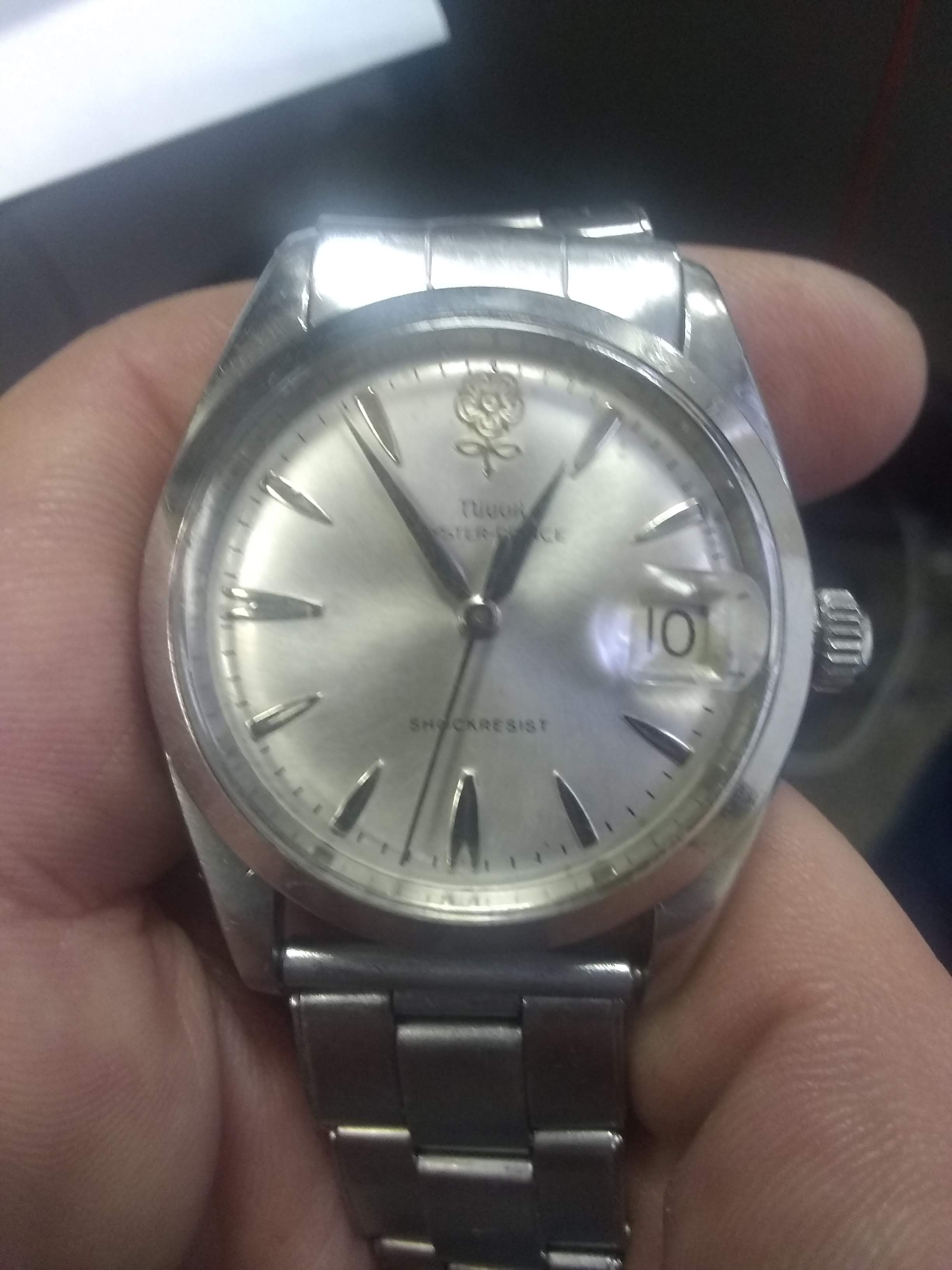
1957 Rolex Tudor Oyster Prince Big Rose
A Rolex is real nice. It’s one of those things you have to experience for yourself. My first Rolex? 1957 Rolex Tudor oyster date big rose logo. Absolute Dream extremely rare!
In 1905, Hans Wilsdorf and his brother-in-law, Alfred Davis, founded Rolex in London. The two men started their business by importing Swiss movements and putting them inside quality watch cases. As a result, they didn’t need much capital to begin their brand. They were able to market their watches to British buyers without having to develop movements in-house. In 1908, the company officially took on the name Rolex. They chose the name because it was easy to pronounce, and they could write it symmetrically across European languages. Soon after, they relocated to Switzerland to begin designing their own watches.
Early on, Rolex focused on the quality of their movements, and those efforts quickly paid off. In 1910, a Rolex timepiece became the first wristwatch in the world to receive chronometer certification. Just four years later, they were awarded a Class A precision certificate. This distinction was typically reserved exclusively for marine chronometers. It was an impressive feat for a company less than a decade old. From that moment forward, Rolex established a reputation for its achievements in precision and accuracy.
By 1926, Rolex had pioneered the technology to create the first water resistant wristwatch, the Oyster. Just a year later, they put this innovative timepiece to the test. In 1927, swimmer Mercedes Glietze wore a Rolex Oyster around her neck while swimming across the English Channel. The watch emerged unaffected and in perfect working condition. Rolex continued to make waves in the watchmaking industry by patenting the world’s first perpetual self-winding mechanism in 1931. Today, this groundbreaking system is found in each and every modern automatic watch.
In the decades to follow, Rolex continued to break ground with their ingenuity and inventive spirit. In 1945, they debuted the Air-King and the Datejust, the first self-winding wristwatch to display the date on the dial. In 1953, Rolex released the Explorer and the Submariner, the first dive watch waterproof up to 100 meters. A year later, the brand introduced the GMT Master. It was the first aviator’s watch to allow pilot’s to tell the time in multiple time zones at once. Finally, in 1956, they unveiled the Day-Date – the first wristwatch to display the date and day of the week in a window on the dial.
In the latter half of the twentieth century, Rolex has continued to innovate. For instance, in 1963, they introduced another one of their signature collections: the Daytona. The original inspiration for the line was the legendary Sir Malcom Campbell, who set an impressive five land speed records. Over the years, the iconic model has evolved. It’s progressed from early Paul Newman Daytonas of the 1960s and 70s to the latest stainless steel and ceramic version. Four years later, Rolex debuted the Sea-Dweller. The model built upon the iconic Submariner with stronger capabilities, like an increased depth rating. Though the Deepsea replaced it in 2008, used Sea-Dwellers continue to be incredibly popular in the pre-owned market.
Rolex has not slowed down in the past few decades. Just before the turn of the century in 1992, they unveiled the Yacht-Master. They designed this collection to help skippers measure and anticipate the crucial countdown interval leading up to the start of a regatta or sailing race. However, over the years, it has become a favorite among collectors and fans of the brand. In the new millennium, Rolex released the Sky Dweller at Baselworld in 2012. This was the brand’s first entirely new watch showcasing an entirely new complication in twenty years.
Over the years, Rolex has carved its place in sports and pop culture. They’ve done so by cultivating countless high-profile relationships across an array of industries. For decades, Rolex has been present at some of the most significant moments in tennis, golf, motor sport, sailing, and at equestrian races. The brand hasn’t just served as a sponsor for these events. They’ve also served as a strong supporter and partner to these industries. One of their most recent partnerships came in 2018. That year, Rolex expanded their work in the sport of tennis. They landed a partnership with a third Grand Slam tournament: the U.S. Open. In addition to their work in the area of sporting with longstanding partnerships like those with Formula 1 Racing, Rolex has also made an impact in the areas of art and science.
With such a wide variety of distinct watches, Rolex has established a distinct reputation. They’re one of the most well-known and sought after watch brands in the world. Today, the Rolex crown serves as an iconic symbol associated with unprecedented quality, innovation, and prestige. Above all, Rolex has engineered some of the highest caliber wristwatches for enthusiasts and collectors to pass down for generations to come.
How to Check your background check…before it’s an issue!
You’re about to rent an apartment. You’ve saved for your security deposit and lined up a moving truck. But have you checked your credit report? Landlords may, so you should too. If a landlord does a background check, here are some things to know about your rights.
Landlords can check your credit, criminal history, and even your rental history. They may ask your permission but they’re not required to. So, if you know you’ll be looking for a new place to live – or if you’re about to renew your lease – then here are a few things you can do:

- Go to annualcreditreport.com to check your credit. That way, you can fix any errors before a landlord sees them.
- Give the landlord your correct full name—first, middle, and last—and date of birth. This helps make sure the landlord gets information on the right person.
- If you have a criminal history or previous housing court actions, gather any paperwork showing how the action was resolved in case you need to fix errors.
Some landlords might say not to apply if you have a criminal record. That could be discrimination. If that happens to you or if you think that a landlord illegally discriminated against you for another reason, such as your race or gender, contact the Department of Housing and Urban Development.
What if a landlord refuses to rent to you or charges you more because of something in a background check? Then you have rights:
- The landlord must give you notice of the action – orally, in writing or electronically.
- The notice must give you contact information for the company that supplied the report.
- The notice must tell you about your rights to correct inaccurate information and to get a free copy of the report if you ask for it within 60 days of the landlord’s decision.
You should obtain your free report, fix any errors, and have the company that supplied the report give the corrected report to the landlord. Tell the landlord about the mistake, too. For more information on background reports and your rights, check out the Summary of Rights.
If you think a landlord or property manager violated your rights – or anyone else’s – when using a background check, report it to the FTC. And if you’re a landlord who wants to do the right thing, check out Using Consumer Reports: What Landlords Need to Know.
 Make it Lane
You must be logged in to post a comment.